

Nov . 28, 2025 22:45 Back to list
Optimize Protection with the Right Mosquito Net Size | Comprehensive Guide
Understanding Mosquito Net Size: Why It’s More Crucial Than You Think
When you think of mosquito nets, size might seem like a minor detail. But globally, the mosquito net size can make or break the effectiveness of these humble screens in preventing deadly mosquito-borne diseases such as malaria and dengue fever. Given that hundreds of millions rely on these nets every year, understanding their dimensions and how they tie into coverage, comfort, and durability is surprisingly important.
In practical terms, the right mosquito net size means better protection, longer usability, and ultimately fewer disease transmissions. And it transcends just home use — relief organizations, hospitals, and even industrial camps need nets that fit their specific spatial requirements. So, why should you care? Well, for one, mosquito nets are the frontline defense in many regions where healthcare resources may be limited. Get that sizing right, and you’re literally saving lives.
The Global Importance of Mosquito Net Size
It’s fascinating how something as simple as a net’s size can be a global health matter. According to WHO, malaria alone caused over 600,000 deaths worldwide in 2021, with children under five bearing the brunt. Mosquito nets, particularly treated ones, remain one of the most cost-effective interventions to combat malaria. But the effectiveness hinges on the net’s fit — nets too small leave gaps, while excessively large nets can be cumbersome and unused.
Worldwide, agencies such as the UNICEF and the Bill & Melinda Gates Foundation have standardized net dimensions to maximize impact during mass distribution programs. The challenge often lies in balancing standard sizing with local housing types, which vary widely — from small huts in sub-Saharan Africa to larger dwellings or dormitories in Southeast Asia.
What Exactly Is Mosquito Net Size?
At its simplest, mosquito net size refers to the physical dimensions of a net — length, width, height (if shaped like a box or dome), and mesh size. Think of it as the net’s “footprint” and the space it covers when installed over a bed or sleeping area.
In humanitarian terms, this isn’t just about aesthetics; it’s about effective coverage. For example, a single bed net may be roughly 190 cm long and 150 cm wide to cover an adult mattress comfortably. But sometimes nets come in doubles or family sizes, exceeding 200 cm in length and width.
Importantly, the mesh opening size — typically expressed in holes per square inch (or thread count) — is a critical companion specification, ensuring mosquitoes can’t slip through. ISO standards, like ISO 18369, provide guidelines on the appropriate mesh size to balance airflow and protection. So, mosquito net size is a practical mix of "how big" and "how fine."
Key Factors Influencing Mosquito Net Size
1. Bed Dimensions and Usage Environment
Not all beds are standardized. In many low-income regions, sleeping surfaces can be floor mats or raised bamboo platforms. The net must suit these irregular shapes and sizes. Oddly enough, many engineers say a slightly oversized net is better to prevent gaps but shouldn’t be so large it becomes a nuisance. That’s a delicate balance.
2. Durability and Material Thickness
Believe it or not, thicker nets with denser weaves tend to be heavier and thus might require larger hanging spaces to avoid crowding in a small room. Conversely, super-lightweight nets allow for more snug fits but may be less durable.
3. Portability and Packaging
For relief organizations, nets must compact easily. Size thus affects transport logistics. Packing a larger net tightly without damaging it is an art form too.
4. Cultural and Climate Considerations
In humid tropical zones, airflow is paramount — so the net size must maximize breathability while securing the user. Some regions prefer box nets suspended from ceilings; others like tent-shaped nets for ease.
5. Cost Efficiency
Cost scales with size. Larger nets use more material and thus cost more to produce and ship. Hence the drive to optimize sizing to match common local bed dimensions closely.
How Mosquito Net Size Plays Out Worldwide
A few examples stand out:
- Sub-Saharan Africa: Standard rectangular bed nets dominate, sized around 180x150 cm, but in rural areas, larger family nets covering multiple sleeping mats are gaining popularity.
- Southeast Asia: Nets often must accommodate bamboo or rattan beds that are wider and shorter, so nets measuring approx. 200x100 cm are preferred.
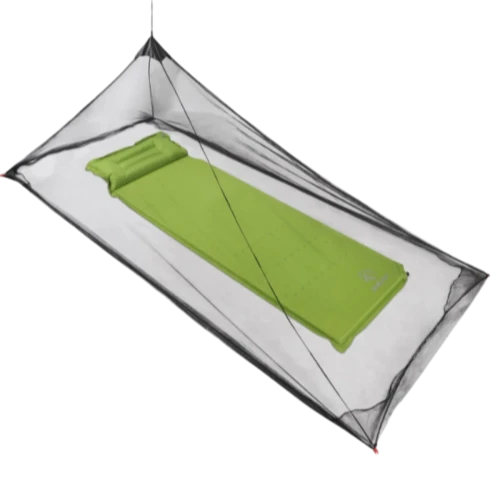
- Post-Disaster Relief: Portable nets that fold flat no bigger than 40x40x10 cm packed, but once deployed can open to around 200x150 cm, suitable for emergency sleeping cots.
- Industrial Camps in Remote Zones: Durable, large box nets (220x180x150 cm) are standard to cover bigger sleeping arrangements used by workers.
In these settings, organizations like the International Red Cross and Médecins Sans Frontières often coordinate with local suppliers to customize net sizes to specific needs, an effective but logistically challenging approach.
The Specs Behind Popular Mosquito Net Sizes
| Parameter | Standard Single Net | Family/Double Net | Emergency Portable Net |
|---|---|---|---|
| Length | 190 cm | 210 cm | 200 cm (deployed) |
| Width | 150 cm | 180 cm | 150 cm (deployed) |
| Height | 140 cm (max) | 160 cm (max) | 120 cm (max) |
| Mesh Count (holes/in²) | 156 | 156 | 150 |
| Weight | 350 g | 580 g | 400 g |
How Do Leading Vendors Stack Up on Mosquito Net Sizes?
| Vendor | Typical Size Range (cm) | Material | Durability (years) | Price Range (USD) |
|---|---|---|---|---|
| SafeNet Distributors | 180x150 to 210x180 | Polyester treated | 3–5 | $5 - $12 |
| EcoSleep Solutions | 190x150 to 230x200 | Organic cotton blend | 5–7 | $15 - $25 |
| ReliefPro Nets Co. | 175x140 to 200x160 | Light nylon mesh | 2–4 | $4 - $9 |
Why Choosing the Right Mosquito Net Size Matters in the Long Run
The advantages are pretty straightforward once you think about it:
- Enhanced Protection: Properly sized nets eliminate gaps, meaning mosquitoes can’t sneak in.
- Comfort and User Adoption: A net that fits well encourages consistent use — a big deal when people get hot or claustrophobic.
- Cost-Effectiveness: Using optimal sizes reduces waste and lowers shipping costs.
- Sustainability: Durable nets sized right last longer, minimizing environmental impact.
On a more human level, having a mosquito net that "fits" feels like dignity — like you’re a bit safer, cared for, protected. Especially in challenging environments, that can’t be overstated.
The Future: Innovations Changing Mosquito Net Sizes
Innovations are changing the game. Lightweight, eco-friendly materials like biodegradable polymers allow for larger nets without weight penalties. Some vendors now produce adjustable or expandable nets that adapt to different bed sizes — clever stuff. There’s even research into embedding sensors into nets to monitor usage and pest attacks, promising smarter distribution strategies.
Moreover, solar-powered insect repellents integrated into nets, or smart mesh that can change pore size based on conditions, could redefine what “mosquito net size” means in the near future.
Common Challenges and Smart Solutions
It’s not always easy:
- Sizing Mismatch: Standard nets sometimes don’t fit locally diverse beds. A modular sizing approach can address this.
- Durability vs. Weight: Tough nets often weigh more, making them harder to transport and install.
- Cost Constraints: Larger or specialized nets increase price, which can limit accessibility.
Solutions? Collaboration between suppliers and NGOs to prioritize customizable, modular sizing and bulk procurement models is key. Some have advocated for more flexible ISO sizing standards to accommodate the diversity of living conditions around the world.
FAQ: Mosquito Net Size Questions Answered
- Q: How do I know what mosquito net size fits my bed?
- A: Measure your bed’s length, width, and height (if indoors) and compare it with net dimensions. Leave extra room for hanging ease and air circulation. For typical single beds, nets around 190x150 cm work well. Check sizing labels to match closely.
- Q: Can mosquito nets be too big?
- A: Yes, oversized nets can become cumbersome, collect dust, and discourage use. Plus, they’re heavier and trickier to handle. Finding a balance between adequate coverage and manageable size is best.
- Q: Are emergency nets different in size from home nets?
- A: Emergency nets are generally designed to be compact for transport but expand when deployed to cover standard sleeping areas — roughly similar in size to home nets but optimized for portability.
- Q: Why does mesh size matter alongside mosquito net size?
- A: Mesh size dictates what insects can enter. Small enough holes keep out mosquitoes while maintaining airflow. ISO standards guide optimal mesh counts to balance protection with comfort.
Conclusion: Size Does Matter — More Than Just a Number
The humble mosquito net size is a small detail with outsize impact on global health. Getting the size right means better protection, greater comfort, and increased durability — all of which empower the users and communities that rely on them most.
So next time you think “just a net,” remember — dimensions are life-saving design decisions.
For more expert advice and detailed product specifications, visit our website: https://www.crscreen.com.
Sometimes it feels like these little things really do make all the difference, at least from where I’m standing.
References
- World Health Organization. Malaria Factsheet. https://www.who.int/news-room/fact-sheets/detail/malaria
- International Organization for Standardization (ISO 18369) – Mosquito Nets. https://www.iso.org/standard/64524.html
- United Nations Children’s Fund (UNICEF). Malaria Prevention and Nets Distribution. https://www.unicef.org/health/malaria

Latest news
-
Best Guide to Choose a Screen Door for Sliding Door for Your Home
NewsApr.16,2026 -
The Ultimate Guide to Choosing a screen door for a sliding door
NewsApr.09,2026 -
Choosing the Perfect Patio Sliding Screen Door for Your Home
NewsApr.07,2026 -
Choosing the Best Patio Screen Door with Frame for Your Home and Lifestyle
NewsApr.04,2026 -
Comprehensive Guide to Net Sliding Door Price Factors and Options
NewsMar.31,2026 -
Enhance Your Outdoor Space with a Durable Net Sliding Door for Balcony
NewsMar.28,2026 -
Discover the Benefits of Net Door Sliding Systems for Modern Homes
NewsMar.26,2026