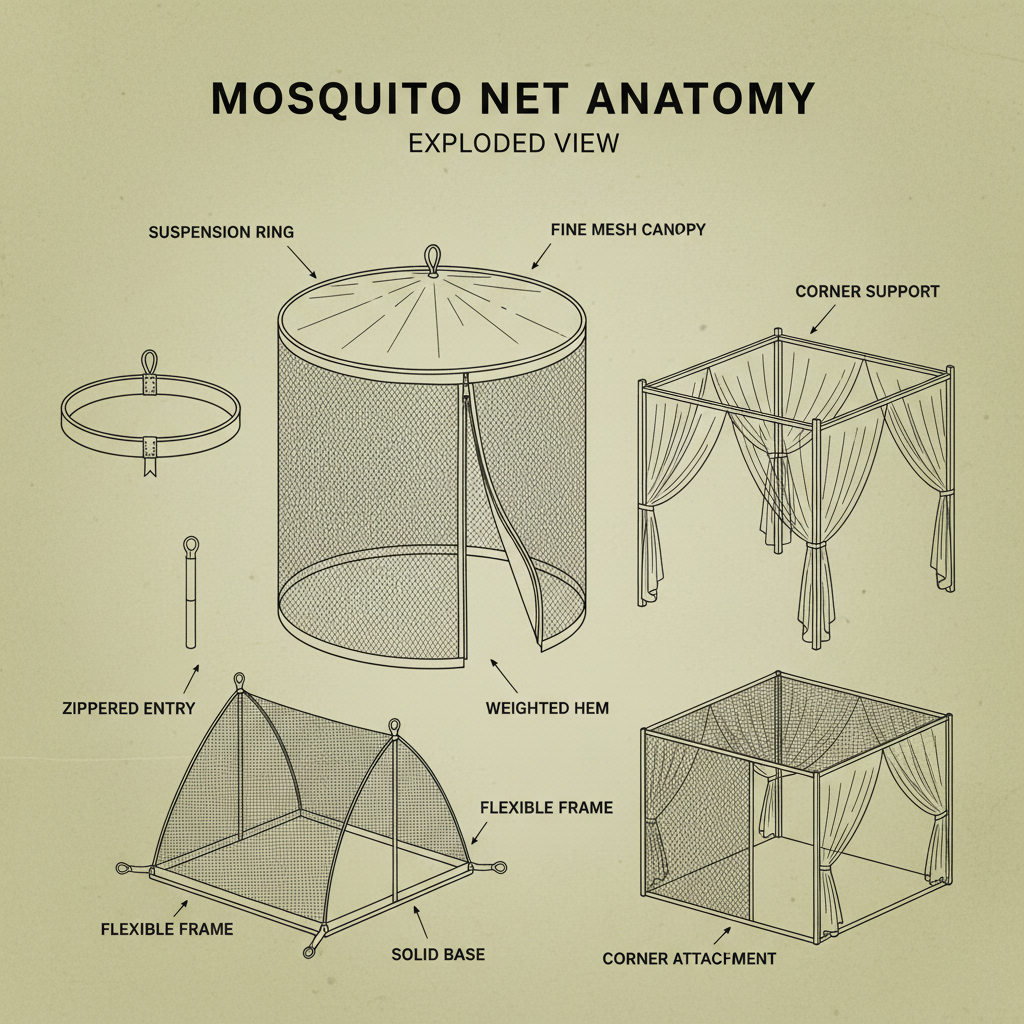
The global demand for effective pest control in residential and commercial architecture has led to a significant shift in how engineers and homeowners approach screening solutions. When professionals decide to buy mosquito netting, the decision is no longer just about blocking insects, but about balancing airflow, light transmission, and structural durability.
This evolution is driven by the need for materials that can withstand diverse climatic conditions while remaining virtually invisible to the naked eye. The technical challenge lies in creating a mesh that is tight enough to exclude microscopic pests but open enough to prevent the "closed-window" feeling, which often forces a reliance on energy-intensive air conditioning.
In this technical analysis, we evaluate the material science behind modern insect screens and provide a framework for selecting the right specifications based on environmental exposure and visibility requirements.


Modern high-performance insect screens are primarily engineered from fiberglass or polyester. These materials are selected for their high strength-to-weight ratio and their ability to maintain tension over long periods without sagging.
The addition of a protective coating is critical; this layer enhances resistance to UV radiation and chemical weathering, preventing the polymers from becoming brittle under prolonged sunlight exposure.
The efficacy of a screen is determined by its aperture size and thread diameter. A smaller aperture effectively blocks smaller insects but can increase wind resistance, which in turn reduces natural ventilation. Engineers must calculate the "open area percentage" to ensure the building's passive cooling systems remain functional.
Durability is measured by the tear strength and the corrosion resistance of the coating. In coastal environments, for instance, the salt-laden air can accelerate the degradation of inferior coatings, making the use of high-grade polyester or coated fiberglass essential for longevity.
Flexibility is another key operational parameter. The mesh must be pliable enough for seamless installation into aluminum or plastic frames, yet rigid enough to resist puncturing from pets or external debris.
It is a common misconception that lighter colored screens are less visible. In reality, light-colored meshes reflect more light back into the observer's eye, creating a noticeable haze or glare that obstructs the view of the exterior.
Beyond aesthetics, this light absorption property helps filter harmful UV rays and reduces the internal temperature of the room, which can lower the energy load on HVAC systems during summer months.
When analyzing different mesh materials, we evaluate them across several dimensions: visibility, UV resistance, airflow efficiency, and durability. Different applications—ranging from residential bedrooms to industrial food processing plants—require different prioritizations.
The following assessment provides a normalized rating based on typical engineering performance profiles for common netting materials.
The application of insect screens extends beyond simple home windows. In agricultural settings, black netting is utilized to protect high-value crops from pests while ensuring that sufficient sunlight reaches the plants for photosynthesis. In industrial facilities, these screens are mandatory for maintaining hygiene standards and preventing contamination in food-grade or pharmaceutical environments.
Successful integration depends on the frame system. Whether using Aluminum-Plastic composites or traditional aluminum extrusion, the tensioning mechanism must prevent the mesh from sagging over time, which would otherwise compromise the insect-proof barrier and create aesthetic failures.
All polymer-based screens are subject to photo-oxidation caused by UV exposure. High-quality screens incorporate UV stabilizers into the coating to slow this process, but maintenance remains essential. Accumulation of dust and pollen can restrict airflow and reduce the visibility benefits of black mesh.
Maintenance for coated fiberglass and polyester screens is relatively straightforward. Because the dark color tends to hide minor debris better than white or grey screens, they maintain a cleaner appearance for longer. However, a periodic wash with mild soap and water is recommended to restore the original airflow rate.
In humid or coastal regions, the primary failure mode is often not the mesh itself but the corrosion of the fasteners or the frame. Using corrosion-resistant coatings and ensuring a tight seal between the mesh and the frame can significantly extend the overall lifespan of the installation.
Choosing the right mesh requires a trade-off analysis between durability, visibility, and cost. A residential user might prioritize high visibility and ease of installation, whereas an industrial buyer would focus on tear resistance and compliance with environmental certifications like CE or REACH.
The material choice also affects the long-term energy efficiency of the building. By reducing the need for artificial cooling through improved natural ventilation and UV filtering, the right screen selection becomes a sustainable engineering decision.
The following matrix provides a comparative framework for different configuration profiles based on typical industry requirements.
| Configuration Profile | Primary Material | Key Performance Factor | Recommended Use Case |
|---|---|---|---|
| Basic Residential | Fiberglass | Cost-Effectiveness | Standard Home Windows |
| High-Visibility | Coated Polyester | Optical Transparency | Living Rooms/Porches |
| Heavy-Duty | Reinforced Polyester | Tear Resistance | Pet-Owner Households |
| Industrial Hygiene | Polymer-Coated Mesh | Contamination Control | Food Processing Plants |
| Agricultural Protection | UV-Stabilized Poly | Photosynthesis Balance | Greenhouses/Crops |
| Coastal Grade | Anti-Corrosive Mesh | Salt-Spray Resistance | Beachfront Properties |
For coastal environments, polyester or fiberglass with a specialized anti-corrosive coating is recommended. Salt-laden air can quickly degrade standard materials, causing them to become brittle or rust. Coated meshes provide a barrier against saline corrosion, ensuring that the screen maintains its structural integrity and tension over several years of exposure to humid, salty air.
Black screens actually improve the visual experience by reducing glare. While they absorb more light than white screens, the difference in overall indoor luminosity is negligible for most residential applications. The primary benefit is the reduction of reflected light, which allows the eye to see the exterior landscape more clearly, effectively increasing the "perceived" light and view.
Airflow efficiency is determined by the "open area" ratio, which is the space between the threads. To evaluate this, you should check the mesh count (threads per inch). A lower mesh count allows more air but may let in smaller insects. Engineering a balance involves selecting a thread diameter that provides maximum strength with the minimum possible surface area per intersection.
Yes, black screens can contribute to energy efficiency. Their ability to absorb sunlight and filter UV rays reduces the amount of solar heat gain entering the building. By lowering the interior temperature and reducing the glare that causes discomfort, there is often a reduced reliance on air conditioning during peak summer months, leading to lower energy consumption.
The lifespan varies based on environmental exposure. In protected areas, a high-quality fiberglass screen can last 10 years or more. However, in areas with extreme UV exposure or high mechanical wear (such as homes with pets), the lifespan may be shorter. Using screens with high-grade UV coatings and proper tensioning frames significantly extends their operational life.
Stability for large-scale installations, such as screen doors, is achieved through rigid perimeter frames (often aluminum extrusion) and high-tension splines. The mesh must be stretched uniformly to avoid "oil-canning" or sagging. For high-traffic areas, reinforcing the edges and using a heavier-duty polyester mesh prevents the screen from tearing at the tension points.
The selection of insect screening is a technical balance between optical transparency, material durability, and ventilation efficiency. As we have analyzed, black coated fiberglass and polyester provide the optimal solution for those who wish to buy mosquito netting that minimizes visual obstruction while maximizing pest exclusion and UV protection.
For professionals and homeowners alike, the transition toward high-performance black mesh represents a move toward more sustainable and aesthetically integrated building solutions. By prioritizing material certifications and correct aperture specifications, it is possible to create a living environment that is safe from insects without sacrificing the connection to the outdoors.