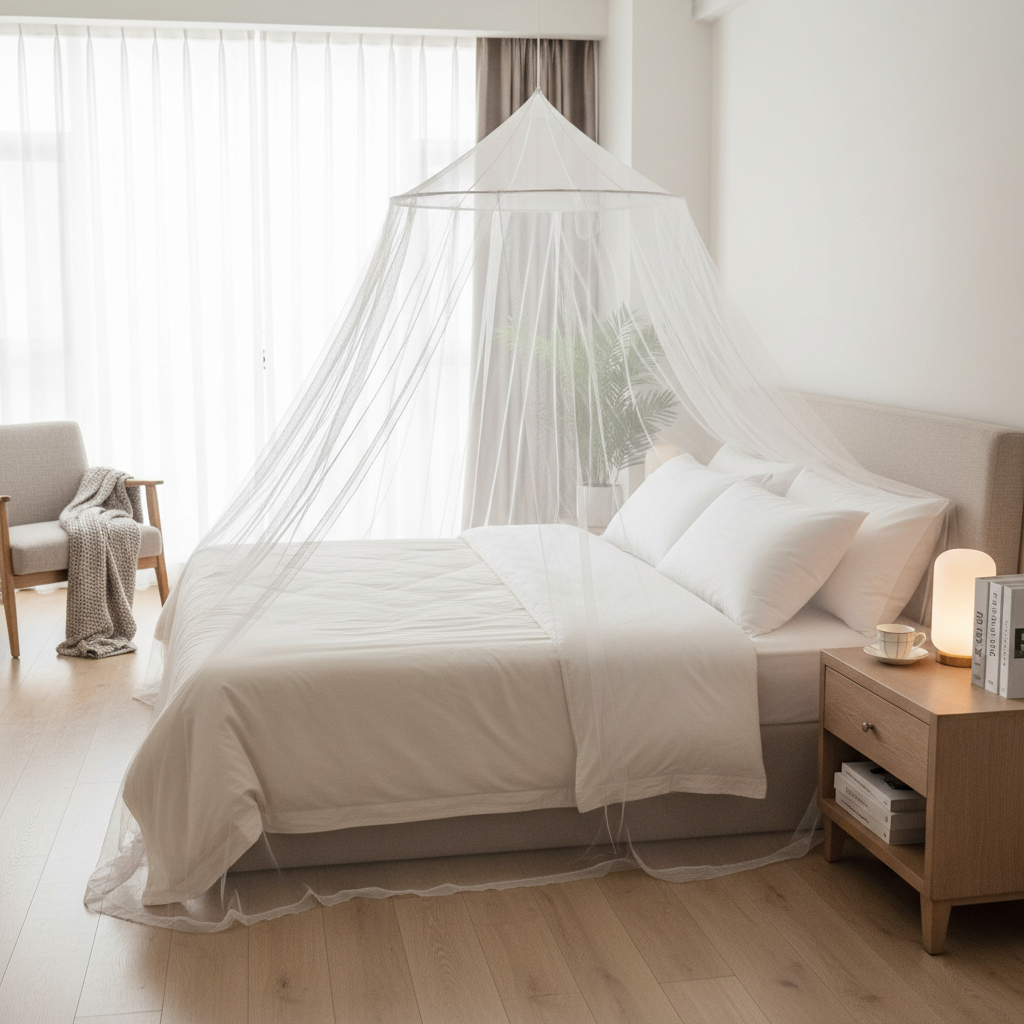
When evaluating the good night mosquito net price, buyers must look beyond the initial cost to understand the relationship between mesh density, material durability, and long-term health protection. In the plastic mesh and netting industry, pricing is rarely a flat rate but rather a reflection of the technical specifications required to block specific insect sizes while maintaining airflow.
The primary challenge for consumers and procurement officers is balancing budget constraints with the necessity of a reliable physical barrier against disease-carrying insects. A low-cost net that tears easily or allows small midges through fails its core purpose, potentially leading to higher health-related costs in regions prone to malaria or Zika virus.
This analysis provides a professional framework for understanding the cost drivers of dome hanging mosquito nets, comparing different material grades, and establishing a decision matrix to ensure maximum value for money without compromising safety.

Core Determinants of Mosquito Net Pricing

The good night mosquito net price is primarily driven by the raw material cost and the precision of the weaving process. High-quality nets utilize a fine mesh fabric that prevents insect entry while allowing unrestricted air circulation, which requires more advanced plastic extrusion and weaving machinery.
Beyond materials, the structural design—such as the dome hanging mechanism and the inclusion of suspension rings—adds to the manufacturing complexity. Products certified under standards like CE demonstrate a commitment to safety and quality, which typically commands a premium over uncertified generic alternatives.
Material Analysis: Polyester vs. Cotton
Polyester is the industry standard for modern mosquito nets due to its high strength-to-weight ratio and resistance to moisture. From a pricing perspective, 100% polyester nets offer the best longevity, typically lasting 3 to 5 years if maintained correctly, which lowers the annualized cost of protection.
Cotton nets, while offering a softer feel and higher breathability, are generally more prone to tearing and moisture absorption. This makes them less durable for travel or outdoor use. Buyers focusing on "price per year of use" generally find that polyester provides a superior return on investment compared to natural fibers.
Application-Specific Cost Considerations
The intended environment significantly influences the required specifications and, consequently, the price. For indoor bedroom use, a standard dome canopy focusing on aesthetics and basic protection is sufficient. However, for camping or outdoor activities, tear-resistant materials and portable frames are essential.
In clinical settings, such as hospitals, nets may require higher density meshes or specialized treatments to protect patients from insect-borne diseases. These professional-grade nets involve stricter quality control and certification, resulting in a higher price point than consumer-grade home products.
Relative Value Index by Product Grade
To visualize how different product tiers relate to their effectiveness and price, we use a normalized Value Index. This illustrates that while budget options have the lowest entry price, their relative value drops significantly due to shorter lifespans and lower protection levels.
This conceptual data shows that "Professional Grade" nets provide the highest value over time because their durability and effectiveness reduce the frequency of replacement, despite a higher initial good night mosquito net price.
Installation and Maintenance Cost Impact
Hidden costs often arise from installation requirements and maintenance. A dome hanging net is designed for easy setup, usually requiring only a single ceiling hook. This minimizes the need for professional installation services, keeping the overall deployment cost low.
Maintenance also affects the long-term cost. Machine-washable polyester nets reduce the labor and cost associated with cleaning. Using a laundry bag and a gentle cycle ensures that the fine mesh remains intact, preventing the need for premature replacement due to avoidable damage during cleaning.
Common Procurement Pitfalls
A frequent mistake in procurement is prioritizing the lowest initial price without verifying the mesh aperture size. If the holes in the net are too large, the product fails to block smaller mosquitoes, rendering the investment useless regardless of the cost.
Another risk is ignoring the material's tear resistance. In outdoor or high-traffic environments, a net that lacks reinforced edges will fail quickly. Buyers should verify if the product is made from 100% polyester or a blend, as this directly impacts the product's lifespan and operational cost.
Total Cost of Ownership Framework
When making a final decision, buyers should use a Total Cost of Ownership (TCO) approach. This compares the initial purchase price against expected lifespan and effectiveness. The following table provides a qualitative comparison of common solution types.
| Solution Type | Initial Cost | Lifespan | Protection Level |
|---|---|---|---|
| Budget Nylon | Low | 1-2 Years | Moderate |
| Standard Polyester | Moderate | 3-5 Years | High |
| Premium Dome Canopy | High | 5+ Years | Very High |
| Cotton Natural | Moderate | 2-3 Years | Moderate |
| Hospital Grade | Very High | 5+ Years | Maximum |
| Portable Camping | Moderate | 3-4 Years | High |
Based on this framework, the standard polyester dome net typically represents the optimal balance for residential users, offering high protection and long-term durability at a reasonable price point.
Frequently Asked Questions
The price is primarily influenced by material quality (e.g., 100% polyester vs. blends), mesh density (which determines the size of insects blocked), structural design (dome vs. rectangular), and certifications like CE.
Not necessarily, but higher-priced nets usually offer better tear resistance and a finer weave. The key is to match the specifications to your specific environment rather than just looking at the price.
Polyester is more durable and moisture-resistant than cotton. While it may have a slightly different initial cost, its ability to last 3-5 years significantly reduces the replacement frequency and overall cost.
Yes, dome nets are highly versatile and can be used for camping or over hammocks. For these uses, we recommend choosing a tear-resistant polyester version for better durability.
Hand washing with mild detergent is safest. If machine washing, use a laundry bag and a gentle cycle with cold water. Avoid dryers, as high heat can damage the polyester mesh.
Look for CE certification, which indicates the product meets European health, safety, and environmental protection standards, ensuring a reliable quality level.
Conclusion
Determining the ideal good night mosquito net price requires a shift from focusing on the lowest single purchase cost to analyzing the total value provided over the product's lifespan. High-grade polyester dome nets offer the most consistent protection and durability, making them the most economical choice for long-term health and comfort.
For procurement and selection guidance based on specific material needs or large-scale requirements, you can review detailed product specifications at www.crscreen.com.